Luxury Property Investment in the Middle East - International Investor Guide
Luxury property investment in the Middle East occupies a distinctive position within the international real estate market. The region combines established global destinations such as Dubai and Abu Dhabi with rapidly developing luxury markets in Saudi Arabia, major coastal destinations, resort developments and new urban districts.
For an international investor, however, luxury property should not be defined simply by a high purchase price. The investment case depends on the location, scarcity, quality, demand profile, ownership structure, operating costs, potential rental income and eventual resale market.
Luxury property can serve several different purposes. It may be a principal investment, a second home, a vacation property, a wealth-preservation asset, a rental property or part of a broader international property portfolio. Those objectives can lead to very different choices.
What Makes Luxury Property an Investment?
Luxury property can have investment characteristics that differ from mainstream residential real estate. Prime locations may have limited land availability, distinctive views, waterfront access, architectural quality, larger floor areas or access to services that cannot easily be replicated.
Scarcity can be particularly important. A standard apartment may compete with hundreds of similar units, while a unique waterfront villa, penthouse or residence within a tightly controlled development may have a much smaller comparable supply.
That scarcity does not automatically guarantee appreciation. The property still needs a sufficiently deep pool of buyers and a location that remains desirable over time. International investors should therefore distinguish between genuine scarcity and marketing language describing a property as exclusive.
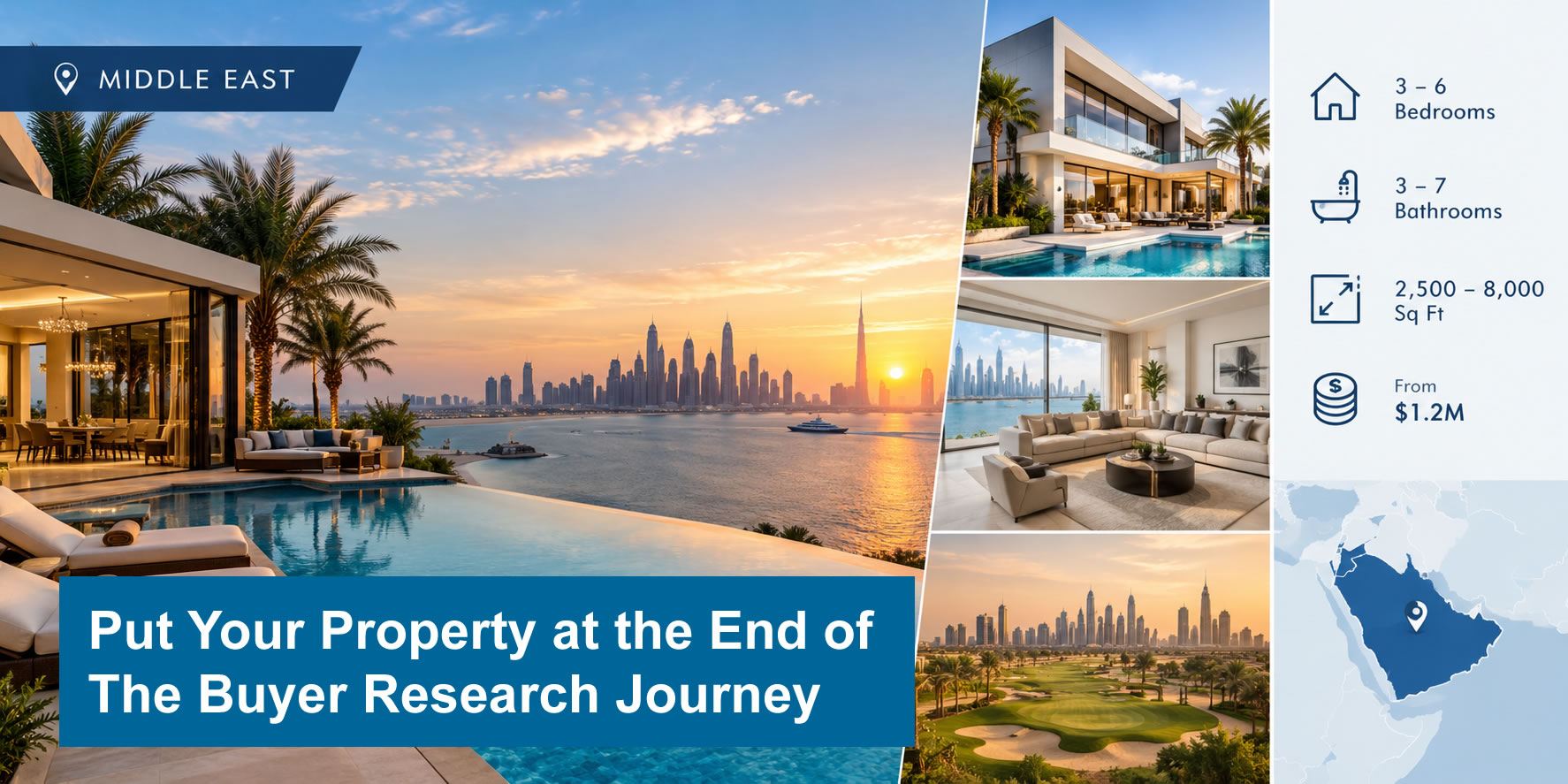

Click the map to open a fullscreen version in a new window, allowing you to zoom in.
Dubai and the International Luxury Market
Dubai has become one of the Middle East's most established international luxury property markets. Its appeal is built around global connectivity, luxury hospitality, waterfront development, high-end retail, restaurants, business infrastructure and a large international population.
The market includes luxury apartments, penthouses, villas, branded residences, waterfront homes and properties integrated into major resort or mixed-use developments.
Dubai is also important because it demonstrates the increasing sophistication of the branded-residence sector. International hospitality, fashion and lifestyle brands have become part of the residential landscape, particularly at the upper end of the market.
For investors, this creates a much wider choice than simply buying a large apartment. The relevant Dubai property market should be examined by neighbourhood, property type and intended investment strategy.
Middle East Residential Rental Yield Comparison by Key International Markets (2026)
| Location | Typical Rental Property | Indicative Gross Rental Yield | Rental Market Character |
|---|---|---|---|
| Dubai, United Arab Emirates | Apartments, studios, serviced apartments, townhouses, villas, waterfront residences, investment properties | Approx. 5% - 8% Selected mid-market apartments can exceed 8% |
One of the Middle East's strongest and most established international rental markets. Apartments generally produce higher yields than villas, with mid-market locations often outperforming prime luxury districts. Strong expatriate demand, population growth, international connectivity and a large freehold investment market support rental activity. Prime waterfront and ultra-luxury properties typically produce lower percentage yields. |
| Abu Dhabi, United Arab Emirates | Apartments, waterfront residences, villas, townhouses, branded residences, investment properties | Approx. 4.5% - 7% Apartments generally toward the upper end |
Abu Dhabi provides a substantial rental market supported by government, financial, energy and professional employment. Apartments on locations such as Al Reem Island, Yas Island and other major developments can provide attractive rental returns, while prime luxury villas and high-value waterfront property generally produce lower percentage yields. |
| Riyadh, Saudi Arabia | Apartments, family residences, villas, townhouses, gated communities and investment apartments | Approx. 4% - 7% Some centrally located apartments can be higher |
Riyadh's rental market is being reshaped by population growth, business investment, employment expansion and Vision 2030. Rental yields vary considerably by neighbourhood and property type. Apartments can provide stronger income returns than large villas, while premium family housing benefits from strong demand in established employment and business districts. |
| Jeddah, Saudi Arabia | Apartments, waterfront residences, villas, family homes, gated communities and investment properties | Approx. 5% - 9% | Jeddah can provide higher rental yields than Riyadh in some segments, particularly apartments. The city combines a large domestic and expatriate population with commercial, port, tourism and waterfront development. Current market data indicates particularly strong potential yields for smaller apartments, although individual properties vary substantially. |
| Doha, Qatar | Apartments, serviced residences, waterfront apartments, villas and investment properties | Approx. 4.5% - 7% | Doha has an established expatriate rental market and substantial modern residential stock. The Pearl, Lusail and other international ownership areas offer a broad range of investment apartments. Smaller well-located apartments can produce stronger yields, while premium waterfront and larger properties generally offer lower percentage returns. Current broad-market estimates are around the 5% level, with selected properties considerably higher. |
| Manama, Bahrain | Apartments, studios, waterfront residences, serviced apartments, villas and investment properties | Approx. 5% - 9% Strong investor properties can reach 8%+ |
Bahrain is one of the Gulf's more income-oriented residential markets. Lower entry prices compared with Dubai and Abu Dhabi can produce attractive rental yields, particularly for studios and one-bedroom apartments in established expatriate districts such as Juffair and surrounding areas. Premium waterfront properties generally provide lower percentage yields. |
| Muscat, Oman | Apartments, villas, gated communities, waterfront residences and resort properties | Approx. 5% - 7% | Muscat offers a lower-density residential market with a mixture of expatriate rental demand, local housing and tourism-related property. Apartments generally provide stronger yields than larger villas. Integrated tourism developments and established expatriate districts can offer attractive rental opportunities, although market liquidity is lower than in Dubai. |
| Kuwait City, Kuwait | Apartments, investment buildings, private residences, villas and residential investment properties | Approx. 4% - 6% | Kuwait has a substantial established rental market driven by domestic households and expatriate workers. Rental returns vary strongly between central and outer districts and between investment apartments and larger private residences. Apartments outside the most expensive central locations can offer higher gross yields than premium properties. |
| Istanbul, Turkey | City apartments, investment apartments, new developments, serviced residences and luxury apartments | Approx. 5% - 10% Selected lower-cost districts can exceed 10% |
Istanbul is one of the region's largest and most diverse rental markets. Yields vary enormously between established central districts and lower-cost outer areas. International investors can find relatively high gross yields, particularly where purchase prices remain comparatively low relative to rents, although inflation, currency movements and ownership costs need to be considered carefully. |
| Antalya and Turkish Mediterranean Coast, Turkey | Holiday apartments, beachfront apartments, villas, resort residences and long-term rental properties | Approx. 5% - 8% | Antalya combines conventional residential rental demand with a major international tourism and second-home market. Smaller apartments can provide stronger long-term rental yields, while villas and premium coastal property often depend more heavily on seasonal and holiday letting. Antalya's broad-market apartment yields are generally around the mid-single to upper-single digits. |
| Amman, Jordan | Apartments, family homes, villas, furnished apartments and investment properties | Approx. 4% - 6% | Amman is primarily a conventional residential and regional rental market rather than a high-volume international investment centre. Demand is supported by the city's role as Jordan's commercial and administrative capital. Furnished apartments and properties in well-established districts can produce stronger rental returns, while larger family homes generally produce lower percentage yields. |
| Aqaba, Jordan | Resort apartments, holiday homes, waterfront residences, villas and tourism-related property | Approx. 4% - 7% Holiday letting can differ substantially |
Aqaba is a smaller specialist coastal market where rental performance can depend heavily on tourism, seasonality and the type of property. Long-term residential yields should not be directly compared with short-term holiday income. Resort and waterfront properties may offer additional short-let potential but can also involve higher management, furnishing and vacancy costs. |
| Beirut and Lebanese Coast, Lebanon | City apartments, furnished apartments, luxury residences, coastal homes and investment properties | Approx. 4% - 7% | Beirut has historically offered a relatively strong rental market for selected apartments and furnished accommodation, supported by local, expatriate and diaspora demand. However, economic, financial and political conditions make Lebanon substantially higher risk than the leading Gulf markets. Gross rental yield should therefore be considered alongside currency, liquidity, operating and country-risk factors. |
Rental yields shown are broad indicative gross rental yields for 2026 and are intended as a market comparison guide rather than formal investment forecasts. Gross yield is generally calculated from annual rental income divided by the property's purchase price before service charges, maintenance, management fees, vacancy, insurance, taxes, financing costs and other ownership expenses. Actual yields can vary substantially between neighbourhoods, buildings, property types and individual properties. Apartments and smaller investment units often produce higher percentage yields than large villas, prime waterfront homes and ultra-luxury residences. In Dubai, for example, current 2026 market data places average gross residential yields at roughly 6% to 7%, with apartments generally outperforming villas. Saudi Arabia, Turkey and Bahrain also contain selected markets where gross yields can be considerably higher than the broad city or country averages. Short-term and holiday rentals can produce different gross revenues but involve greater management requirements, seasonality and operating costs. Overseas buyers should consider purchase price, rental demand, occupancy, service charges, taxation, ownership rules, currency movements, financing, property management, liquidity and local market conditions before relying on any rental-yield figure.
Abu Dhabi and Prime Waterfront Property
Abu Dhabi offers a different luxury-property environment, with a combination of established residential districts, waterfront communities, cultural destinations, investment zones and large-scale development.
Its luxury market can appeal to investors seeking high-quality residential property within a city with substantial institutional, government, business and cultural activity. Waterfront districts and carefully planned communities provide another source of premium demand.
For international buyers, Abu Dhabi is also relevant because its investment zones provide designated areas in which international ownership is permitted. The precise ownership framework and property eligibility still need to be verified for the individual purchase.
The Abu Dhabi property market therefore provides a useful comparison with Dubai rather than simply being treated as a secondary version of the same market.
Saudi Arabia's Emerging Luxury Property Landscape
Saudi Arabia is developing a new generation of luxury residential destinations alongside its broader economic and tourism transformation. Riyadh, Jeddah, Makkah, the Red Sea coast and major new development areas each offer different forms of high-end property.
The Kingdom's luxury residential sector increasingly includes branded residences, integrated lifestyle communities, resort property and high-specification urban homes. International hospitality brands are becoming involved in developments across several locations, creating a residential product that combines private ownership with hospitality-led services.
This is particularly significant for international investors because the market is moving beyond traditional domestic luxury housing towards destinations designed to attract international capital and visitors.
The broader Saudi Arabia property market should be researched alongside the specific luxury destination rather than evaluated as one uniform national market.
Branded Residences and the Luxury Premium
Branded residences have become one of the most visible segments of Middle Eastern luxury property. These developments associate a residential project with a recognised hospitality, fashion, automotive or lifestyle brand and may provide services, amenities and design standards associated with that brand.
Dubai has developed the deepest branded-residence market in the region, while Saudi Arabia is expanding rapidly through developments in Riyadh, Jeddah, Makkah and tourism destinations.
A brand can potentially contribute to international recognition, marketing reach, service standards and resale appeal. It can also create an additional price premium that the buyer needs to justify.
The important question is therefore not simply whether a residence carries a famous name. Investors should examine the actual services, operator involvement, development quality, service charges, management structure and comparable unbranded properties.
IPD's guide to branded residences in the Middle East provides a useful framework for this comparison.
Waterfront Luxury Property
Waterfront property has a particularly strong role in Middle Eastern luxury real estate. Beachfront villas, marina apartments, island residences and properties overlooking major waterways can command a premium because the setting itself forms part of the product.
But waterfront should not automatically be equated with investment quality. The investor needs to consider accessibility, surrounding development, privacy, views, maintenance, flood exposure, service charges and the availability of comparable properties.
A genuine beachfront residence in a mature destination may have very different characteristics from a property marketed as waterfront because it overlooks an artificial lagoon within a large development.
The wider Middle East coastal property market provides useful geographical context.
Luxury Villas Versus Luxury Apartments
The choice between a luxury villa and a luxury apartment depends heavily on the intended use. Villas can offer privacy, gardens, pools, larger living areas and greater control over the property. Apartments may offer security, concierge services, shared amenities and locations that would be difficult to reproduce with a standalone house.
For rental investment, the likely tenant or guest profile should influence the decision. Families and groups may favour larger villas, while business travellers, couples and high-income professionals may prefer centrally located apartments or serviced residences.
For a second home, personal preferences may dominate. For an investment portfolio, however, the investor should assess how many potential tenants or buyers could realistically afford and want the property.
Luxury Property and International Buyer Demand
Luxury property in the Middle East increasingly operates within a global market. Buyers may originate from Europe, North America, Asia, other parts of the Middle East and established expatriate communities.
This international demand can broaden the potential buyer pool but also makes the market more sensitive to global wealth flows, currency movements, travel connectivity and changes in investor sentiment.
For an overseas investor, this means the future resale market should be considered internationally. A property may be desirable to one domestic buyer group but much less appealing to international purchasers if it lacks recognised location advantages, quality or accessibility.
The wider international buyer market is therefore an important part of luxury-property analysis.
Luxury Property as a Second Home
A significant attraction of Middle Eastern luxury property is the ability to combine investment with personal use. An owner may want a base in Dubai, a waterfront residence, a resort home or a property connected to a preferred lifestyle destination.
This can make the investment decision more complex because financial return is not the only objective. Location, privacy, services, accessibility, personal enjoyment and proximity to airports or leisure facilities may all influence the purchase.
Owners should nevertheless distinguish between a lifestyle purchase and an investment purchase. A property can be exceptionally enjoyable without being the strongest investment in its market.
The Middle East second-home market is particularly relevant to buyers combining personal use with long-term ownership.
Luxury Property and Rental Income
Luxury property can produce rental income, but the rental market is not necessarily as deep as the mainstream market. The pool of tenants able to afford premium accommodation is smaller, and tenant preferences can be more specific.
Prime luxury apartments may benefit from corporate tenants, executives, high-net-worth residents and international professionals. Villas and resort properties may have stronger connections with family, leisure and vacation demand.
Investors should therefore avoid assuming that a higher-value property automatically produces a proportionately higher rental yield. Operating costs, vacancy periods, furnishing, management and service charges can have a significant effect on net income.
The wider Middle East rental investment framework can help distinguish rental potential from capital appreciation.
Luxury Vacation Property
Some luxury properties are particularly suited to vacation use. Beachfront villas, resort residences, branded apartments and distinctive waterfront homes can appeal to visitors looking for experiences rather than simply accommodation.
This can create an opportunity for owners to combine personal use with short-term rental income, subject to the applicable tourism and property regulations.
However, luxury vacation property can be more management intensive. Guests expect high service standards, rapid maintenance and professional presentation. Cleaning, guest communication, furnishing and property preparation all become part of the investment model.
The Middle East vacation rental market should therefore be considered separately from conventional long-term leasing.
Master-Planned Luxury Communities
Luxury property increasingly forms part of larger master-planned developments rather than standing alone. These communities may incorporate residential buildings, villas, hotels, retail, restaurants, leisure facilities, marinas and landscaped public areas.
The attraction for an international buyer is the possibility of acquiring a residence within a complete lifestyle environment. Services and amenities can also make the property easier to operate remotely.
There are risks, however. Large developments can release substantial quantities of similar luxury stock, creating competition between owners. The investor should understand the development's phasing, future supply, management structure and long-term positioning.
IPD's master-planned community research is useful when comparing these environments.
New Luxury Developments and Off-Plan Property
Much of the Middle East's luxury supply is delivered through new developments. Off-plan purchases can provide access to properties at an earlier stage of a development and may offer payment structures that differ from completed property.
The attraction needs to be balanced against delivery and market risk. An investor is buying not only a physical property but also the developer's ability to deliver the promised product and the destination's ability to develop as planned.
Particular attention should be paid to the developer's track record, construction progress, contract terms, escrow arrangements where applicable, service charges, completion obligations and the realistic future supply of comparable properties.
The broader Middle East off-plan market should therefore be approached through detailed project-level due diligence.
Luxury Property and Location Scarcity
Scarcity is one of the most useful concepts in luxury property investment. Prime waterfront land, central business locations, established luxury districts and distinctive resort settings cannot necessarily be reproduced indefinitely.
However, scarcity needs to be measured against the relevant competitive market. A city may have limited beachfront land but still have a large pipeline of luxury apartments elsewhere. A branded development may be unique in name but compete with dozens of other branded projects for the same international buyers.
The investor should therefore define scarcity at the level that matters to the eventual buyer: location, view, land, building quality, service, property size or lifestyle offering.
Luxury Property and Service Charges
Premium services come at a cost. Concierge services, security, landscaping, pools, gyms, private facilities, hotel-style services and extensive common areas can produce substantial ongoing charges.
These costs may be justified when they support the property's desirability, but they need to be included in the investment calculation. A luxury residence with impressive amenities may produce a weaker net return than a simpler property with lower operating costs.
Owners should establish service charges, management costs, maintenance responsibilities and any additional operator fees before committing to the purchase.
Luxury Property and Wealth Preservation
Some international buyers view prime property as a way of diversifying wealth geographically and holding an asset in a major international city or destination.
Property can provide a tangible store of value, but it is not automatically liquid. Selling a high-value property can take time, and the buyer pool for an ultra-luxury asset is inevitably smaller than for mainstream housing.
Wealth preservation therefore requires attention to liquidity, ownership costs, legal structure, market depth and the quality of the underlying asset. A prestigious address alone is not sufficient.
Luxury Property and Foreign Ownership
International buyers need to establish the ownership framework before evaluating individual luxury properties. Middle Eastern countries differ in the locations, property types and ownership rights available to foreign purchasers.
Some markets use designated ownership areas, while others provide different combinations of freehold, leasehold or usufruct rights. The rules can also differ between residential and commercial property.
For luxury buyers, this is particularly important because high purchase values make mistakes more expensive. Ownership eligibility, title, registration and the precise rights attached to the property should be verified independently.
The designated foreign ownership zones framework provides a useful starting point for understanding this issue.
Luxury Property Due Diligence
Luxury marketing can create an unusually strong emotional response, making disciplined due diligence even more important. International buyers should separate the lifestyle proposition from the underlying property fundamentals.
Title, ownership rights, permitted use, developer history, construction quality, service charges, management arrangements, rental rules, financing and resale evidence should all be investigated.
Where a branded residence is involved, the buyer should also establish the relationship between the brand, developer and operator. A brand name on the building does not necessarily mean that the hospitality company owns or manages every aspect of the residence.
The wider property due diligence process should therefore remain independent of the sales presentation.
Luxury Property and Geopolitical Risk
International luxury markets can be particularly sensitive to perceptions of stability, connectivity and international confidence. Buyers with globally mobile wealth can choose between several cities and destinations, so changes in perceived risk may influence capital flows.
This does not mean that every regional event will have the same effect on every property market. The Middle East contains very different political, economic and geographic environments, and investors should assess the individual market rather than applying one regional assumption to every country.
Geopolitical considerations should form part of a wider risk framework that also includes currency, financing, development, supply and exit liquidity.
IPD's Middle East geopolitical property risk research provides broader context for international investors.
Luxury Property and Infrastructure
Luxury property depends on more than the residence itself. International airports, highways, marinas, hospitality infrastructure, restaurants, cultural attractions and high-quality retail can all support the desirability of a premium location.
Large Middle Eastern development programmes frequently combine luxury residential property with infrastructure and destination creation. This can provide substantial long-term opportunity, but it also means investors need to distinguish between an established luxury market and a future destination that is still being built.
Properties in mature locations have the advantage of proven infrastructure and existing demand. New destinations may offer greater potential differentiation but also greater execution risk.
Luxury Property and Resale Liquidity
Resale liquidity should be considered at the time of purchase. A luxury property may have a high theoretical value but a relatively small pool of buyers capable of purchasing it.
Properties with strong international recognition, established locations, distinctive characteristics and broad buyer appeal may have a stronger resale proposition than highly specialised assets.
Investors should examine comparable transactions, the volume of competing listings and the likely buyer profile. The question is not simply what the property might be worth, but who would realistically buy it when the owner wants to sell.
Building a Luxury Property Investment Case
A disciplined luxury-property assessment can be built around several questions. Is the location genuinely prime? Is the property scarce or easily replicated? Who is the likely buyer or tenant? What supports demand? What are the ongoing costs? What competing supply is coming to market?
The investor should then consider financing, ownership rights, management, rental potential and exit liquidity. If the property is off-plan, developer and delivery risk must also be incorporated.
This creates a more useful investment assessment than simply comparing asking prices or relying on the reputation of a developer or brand.
Luxury Property Across the Middle East
The region offers several distinct luxury investment environments. Dubai provides a mature international luxury ecosystem. Abu Dhabi combines prime residential areas with waterfront and cultural destinations. Saudi Arabia is developing new luxury districts and tourism destinations at substantial scale. Qatar, Oman and other markets provide more specialised opportunities connected with particular cities, landscapes and visitor economies.
There is therefore no single definition of the ideal Middle East luxury property investment. An investor seeking rental income may favour an established international city. A second-home buyer may prioritise a resort or waterfront destination. A long-term investor may focus on scarcity, infrastructure and future development. A wealth-preservation buyer may place greater emphasis on liquidity and established international demand.
Research Before Investing in Luxury Property
Luxury property requires the same financial discipline as mainstream investment property, even when the purchase is driven partly by lifestyle. International buyers should investigate the market, location, ownership framework, title, developer or seller, management structure, operating costs, rental possibilities and potential exit before committing substantial capital.
The most expensive property is not necessarily the strongest investment, and the most heavily marketed development is not necessarily the most scarce. The investment case is created by the relationship between location, quality, demand, supply, costs and future buyer appeal.
IPD's broader Gulf luxury property research and Middle East property directory provide a starting point for comparing luxury markets before moving into property-level research and professional due diligence.
Middle East Property Market Comparison by Key International Buyer Hotspots (2026)
| Location | Typical Property Types | Market Price Profile | Market Character |
|---|---|---|---|
| Dubai, United Arab Emirates | Luxury apartments, penthouses, waterfront villas, branded residences, gated communities, off-plan developments, investment properties | Premium to ultra-prime international tier Approx. USD ~$3,500 - $20,000+ per m², with exceptional properties considerably higher |
The Middle East's leading international residential property market and one of the world's strongest luxury markets. Dubai combines a deep developer-led market, extensive freehold areas, strong international demand, tax advantages, major aviation connectivity and a substantial rental-investment sector. Prime and ultra-prime districts command particularly high prices. |
| Abu Dhabi, United Arab Emirates | Waterfront apartments, luxury villas, branded residences, penthouses, gated communities, new-build and off-plan developments | Premium to ultra-prime tier Approx. USD ~$2,500 - $12,000+ per m² |
Abu Dhabi is developing into one of the Gulf's most significant international property markets. Saadiyat Island, Yas Island, Al Reem Island and other major developments offer a mixture of luxury, lifestyle and investment property. The market has benefited from strong high-value development activity and increasing international investment. |
| Riyadh, Saudi Arabia | Villas, family homes, apartments, gated communities, luxury residences, new master-planned developments | Value to premium tier Approx. USD ~$1,500 - $5,500+ per m² |
Riyadh is a rapidly evolving market driven by Saudi Arabia's economic transformation, population growth, business investment and Vision 2030. Historically dominated by domestic demand, the market is becoming increasingly relevant to international investors following major reforms to foreign property ownership. Prime districts and major development projects command substantial premiums. |
| Jeddah, Saudi Arabia | Waterfront apartments, villas, family homes, gated communities, investment apartments, new developments | Value to premium tier Approx. USD ~$1,200 - $4,500+ per m² |
Saudi Arabia's major Red Sea commercial and lifestyle centre offers a broader and generally more accessible market than Riyadh. Waterfront developments, the Corniche, new master-planned communities and major regeneration projects are increasing its appeal to investors and lifestyle buyers. |
| Doha, Qatar | Luxury apartments, waterfront residences, villas, gated communities, branded residences, investment properties | Mid-premium to luxury tier Approx. USD ~$1,800 - $5,000+ per m² |
Doha has a relatively modern residential market with international ownership opportunities concentrated in designated areas. The market has evolved substantially through major developments around The Pearl, Lusail and West Bay. Current pricing is generally below Dubai's prime levels, while the market offers established infrastructure and strong rental demand in selected locations. |
| Manama, Bahrain | Waterfront apartments, luxury apartments, villas, gated communities, investment properties, new developments | Value to premium Gulf tier Approx. USD ~$1,000 - $4,000+ per m² |
Bahrain provides one of the Gulf's more accessible entry points for international buyers, with foreign ownership permitted in designated areas. The market is smaller than the UAE, Qatar and Saudi Arabia but benefits from its financial-services sector, proximity to Saudi Arabia and established expatriate population. |
| Muscat, Oman | Luxury villas, apartments, waterfront residences, resort properties, gated communities, development land | Value to premium Gulf tier Approx. USD ~$1,200 - $4,500+ per m² |
Muscat appeals to buyers seeking a lower-density alternative to the major Gulf cities. International ownership is concentrated in designated integrated tourism complexes and selected developments. The market is characterised by villas, coastal properties, mountain scenery and resort-led communities rather than the high-rise concentration found in Dubai or Doha. |
| Kuwait City, Kuwait | Apartments, investment buildings, villas, private residences, commercial-residential properties | Mid-market to premium Gulf tier Approx. USD ~$1,500 - $5,000+ per m² |
Kuwait has a substantial and established property market, although it remains more domestically focused than Dubai, Bahrain or Qatar. Prime residential and investment districts can command high prices, while the market offers considerable depth across apartments, villas and investment properties. Foreign ownership opportunities remain more restricted than in the UAE and Bahrain. |
| Istanbul, Turkey | City apartments, luxury residences, waterfront homes, branded residences, investment apartments, new developments | Value to premium international tier Approx. USD ~$1,200 - $4,500+ per m² |
One of the Middle East region's largest and most diverse property markets, with strong appeal to international buyers. Istanbul combines a huge domestic market with overseas demand, major urban redevelopment, luxury waterfront districts and comparatively accessible prices relative to Dubai and other global luxury centres. |
| Antalya and Turkish Mediterranean Coast, Turkey | Beachfront apartments, resort residences, villas, holiday homes, gated communities, investment properties | Value to premium resort tier Approx. USD ~$900 - $3,500+ per m² |
A major international second-home and lifestyle market attracting buyers from Europe, the Middle East, Central Asia and other international markets. Antalya, Alanya, Bodrum and surrounding coastal destinations offer a broad range of apartments and villas, with waterfront and established resort locations commanding significant premiums. |
| Amman, Jordan | Family villas, apartments, luxury residences, gated communities, investment apartments | Value to premium tier Approx. USD ~$900 - $3,000+ per m² |
Amman is primarily a residential and regional investment market rather than a Gulf-style luxury investment centre. Demand is supported by the capital's role as Jordan's main commercial and administrative hub, with premium neighbourhoods offering higher-value villas and apartments. |
| Dead Sea and Aqaba, Jordan | Resort apartments, villas, holiday homes, waterfront residences, hotel-linked developments | Value to premium resort tier Approx. USD ~$1,000 - $3,500+ per m² |
Aqaba provides Jordan's principal Red Sea coastal property market, while the Dead Sea is focused more heavily on resort and hospitality-led development. International demand is concentrated around lifestyle, tourism, second-home and investment opportunities rather than a large conventional residential market. |
| Beirut and Lebanese Coast, Lebanon | City apartments, luxury apartments, waterfront residences, villas, investment properties | Value to premium tier Approx. USD ~$1,000 - $4,000+ per m² |
Lebanon has historically attracted substantial regional and diaspora property investment, particularly in Beirut and coastal areas. The market offers comparatively low entry prices for prime Mediterranean property, although economic, financial and political conditions create substantially greater investment risk than the leading Gulf markets. |
Middle Eastern property markets vary enormously between countries, cities and individual developments. Dubai remains the region's most established international residential market and one of the world's leading luxury property centres, while Abu Dhabi has become an increasingly important high-value market. Saudi Arabia is undergoing a major structural transformation as foreign ownership reforms and Vision 2030 development programmes open new opportunities, particularly in Riyadh and Jeddah. Qatar, Bahrain and Oman provide smaller Gulf markets with differing combinations of lifestyle, investment and rental opportunities. Turkey offers a much larger and more diverse international market, particularly in Istanbul and along the Mediterranean coast. Jordan and Lebanon provide additional opportunities but operate in very different economic and investment environments. The figures shown are broad indicative ranges rather than formal market averages: prime waterfront, branded, newly built and ultra-luxury properties can be considerably more expensive, while properties outside the principal international buyer locations can be substantially cheaper. For overseas buyers, foreign ownership rules, location, tenure, currency, rental demand, developer quality, infrastructure, taxation, residency options and geopolitical conditions are important factors when comparing markets.
Explore Middle East Countries: Bahrain - Coastal villas and urban apartments with investment potential in a stable economy.
 Cyprus - Mediterranean lifestyle estates, holiday homes, and high-demand urban apartments.
 Egypt - Residential and resort properties along the Red Sea and in Cairo for long-term growth.
 Iran - Urban apartments and historical properties attracting niche investors.
 Iraq - Strategic urban developments and emerging markets for early-stage investors.
 Israel - Tel Aviv, Jerusalem, and coastal properties offering strong lifestyle and investment appeal.
 Jordan - Amman and resort destinations with stable, tourism-linked investment opportunities.
 Kuwait - Urban and high-end residential developments with strong investor interest.
 Lebanon - Beirut apartments, coastal villas, and boutique lifestyle estates.
 Oman - Muscat residences, luxury resorts, and coastal lifestyle developments.
 Palestine - Urban apartments and historical properties attracting niche buyers.
 Saudi Arabia - Riyadh, Jeddah, and Red Sea developments with growing investment potential.
 Syria - Emerging market opportunities in urban and coastal regions.
 Turkey - Istanbul, Ankara, and coastal resorts appealing to lifestyle and investment buyers.
 Qatar - Doha apartments, luxury villas, and high-yield investment options.
 United Arab Emirates - Dubai, Abu Dhabi, and beyond offering world-class urban and resort real estate.
 Yemen - Coastal and historical properties for specialist investors seeking unique opportunities.
|
|